European settlers in Africa, in what is now Zimbabwe, Zambia, and South Africa crossed European dogs (the smaller Great Danes of the era, Scenthounds, Sighthounds, and Terriers) with the ridged village dogs (now extinct, but similar to the Africanis) of the Khoikhoi people (formerly called “Hottentots” by the Dutch, nowadays the term can be offensive).
These hybrids were used in packs to hunt, most famously to bay Lions, but also as Farmer/Hunter ox-wagon utility dogs in the bush. They also perform well as Scenthounds and Sighthounds. From DNA studies, we now also know the Rhodesian Ridgeback groups most closely in a clade with the Great Dane, both sharing a close common ancestor with the Mastiffs. As the Irish Wolfhounds, Scottish Deerhounds, and Greyhounds share more slightly distant ancestors with Danes and Rhodesians, Sighthound instinct is probably deeply rooted.
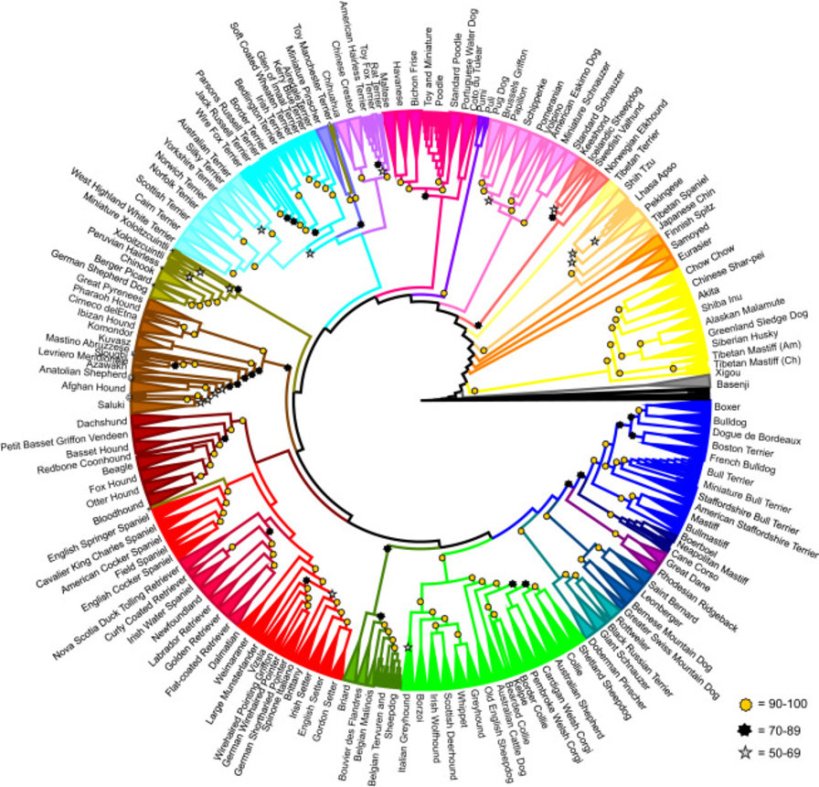
The original breed standard was drafted by F. R. Barnes, in Bulawayo, Southern Rhodesia, in 1922. It formerly was known as Van Rooyen’s lion dog or the African lion hound or African lion dog—simba inja in Ndebele, shumba imbwa in Shon. Cornelis van Rooyen was a big-game hunter who founded the modern Rhodesian Ridgeback bloodline. He claimed to have used the Khoikhoi dog combined with Greyhound, Deerhound, Wolfhound, Bulldog, Irish Terrier and Airedale, Collie, and Pointer. The DNA affinity in the cell study suggests the significant contributions were from: Great Dane, Boerboel (South African Mastiff), Greyhound, and Airedale Terrier, plus the untested Khoikhoi dog.
The DeBeers Diamond mines bred Great Danes with Rhodesians in the 1920s, which seems to have significantly influenced modern Rhodesians, which are much larger than the old style lion dogs.
If you want a Rhodesian Ridgeback, probably the first place to look is Rescue. Even for Rescue Rhodesians, you must know that they are stubborn and fast, powerful dogs. Dogs are often in Rescue because of two main factors: bad breeders, and irresponsible owners. Do not contribute to the problem! You must get any Rhodesian socialized and trained to a standard of behavior where he or she will not pose a hazard in public, which endangers both the dog and other people.
Finding quality breeders: If you absolutely cannot find what you need at a rescue, you must become an educated consumer, or you may be giving business to bad breeders, which also makes you an irresponsible owner. The critical factors: Health, Structure/Conformation to the Standard, Temperament, and Breeder Ethics/Responsibility. Start with the Breed Club, The Rhodesian Ridgeback Club of the United States (RRCUS) listed breeders.
Heath tested parents do not mean the dogs were examined by a vet, it should be much more rigorous than that. The RRCUS and Canine Health Information Center (CHIC) minimum recommended testing for each parent:
· Hip and elbow screenings – OFA, GDC (Institute for Genetic Disease Control in Animals), OVC (Ontario Veterinary College), or Penn-HIP (University of Pennsylvania Hip Improvement Program)Hip Dysplasia – OFA, PennHIP, GDC, or OVC.
· Eyes – Canine Eye Registration Foundation (CERF).
· Thyroid – OFA, or certification by a veterinary pathologist or endocrinologist.
Dogs that have had all the required testing will have a CHIC number, but that does not guarantee the results were good, you must still look them up in the CHIC site
In addition, having someone independent of the breeder evaluate each parent for structural suitability and correctness with the breed standard as breed-stock can be desirable. This is usually done by showing in conformation class, with the best suited receiving a champion title.
Temperament is more difficult to determine as a potential pet parent, but obedience titles from either competition, like the AKC CD, or a certification test like the AKC CGC are good indicators.
Finally, breeder ethics and responsibility can be judged by reputation, and by how selective they are combined with adherence to current ethical norms.
 The Great Heathen Army Kennel