Despite the name, Great Danes derive from the German Mastiffs (Deutsche Dogge) used as aristocrat’s indoor bodyguards in the 17th and 18th century, the Kammerhunde (Chamber-Hound). These were descendants of imported English Boar Hounds (English Dogge), used in the hunting of the dangerous Boar, from the 16th century and earlier.
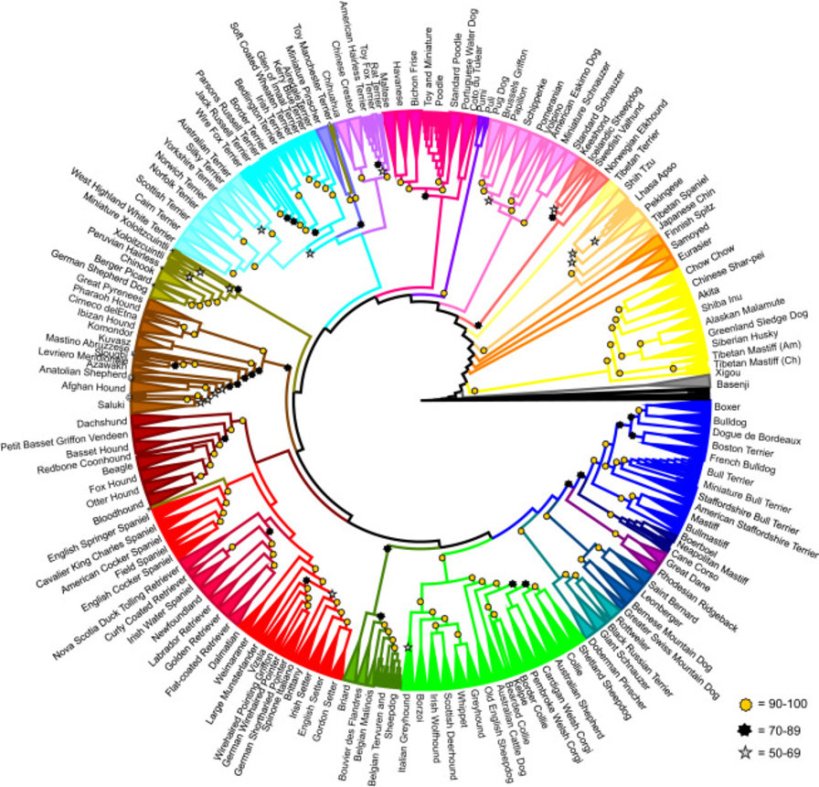
 In the mid to late 1700s French aristocrat naturalist Comte de Buffon Georges-Louis Lecler believed the Celts/Gaels had taken Roman Molosser war dogs (Canis Pugnax) to be bred with Irish Wolfhounds creating the Boar Hound. While touring Denmark, he saw the German-style Greyhound-like slimmer variety of the Boar Hound and wrote in Histoire naturelle, générale et particulière that the Danish climate must have caused Greyhounds to become a “Grand Danois” — Thus the name the breed is called today, despite the lack of obvious Danish lineage. From DNA studies, we now also know the Great Dane groups most closely in a clade with the Rhodesian Ridgeback, both sharing a close common ancestor with the Mastiffs. As the Irish Wolfhounds, Scottish Deerhounds, and Greyhounds share more slightly distant ancestors with Danes and Rhodesians, it remains to be seen how accurate the earlier beliefs are. Large dogs of the type are depicted on several ancient carvings, so much remains to be learned.
If you want a Great Dane, probably the first place to look is Rescue. Even for Rescue Danes, you must know that their needs are closer to an exotic animal than a regular dog. The food and medical expenses are significant, and although giant sweethearts, they are terrifyingly large and powerful. Dogs are often in Rescue because of two main factors: bad breeders, and irresponsible owners. Do not contribute to the problem! You must get any Dane trained to a standard of behavior where he or she will not pose a hazard in public, which endangers both the dog and other people.
Finding quality breeders: If you absolutely cannot find what you need at a rescue, you must become an educated consumer, or you may be giving business to bad breeders, which also makes you an irresponsible owner. The critical factors: Health, Structure/Conformation to the Standard, Temperament, and Breeder Ethics/Responsibility. Start with the Breed Club, Great Dane Club of America (GDCA) listed breeders.
Heath tested parents do not mean the dogs were examined by a vet, it should be much more rigorous than that. The GDCA and Canine Health Information Center (CHIC) minimum recommended testing for each parent:
· Hip Dysplasia – OFA, PennHIP, GDC, or OVC.
· Eyes – CERF.
· Congenital Cardiac Disease – OFA.
· Autoimmune Thyroid Disease – OFA.
Dogs that have had all the required testing will have a CHIC number, but that does not guarantee the results were good, you must still look them up in the CHIC site
In addition, having someone independent of the breeder evaluate each parent for structural suitability and correctness with the breed standard as breed-stock can be desirable. This is usually done by showing in conformation class, with the best suited receiving a champion title.
Temperament is more difficult to determine as a potential pet parent, but obedience titles from either competition, like the AKC CD, or a certification test like the AKC CGC are good indicators.
Finally, breeder ethics and responsibility can be judged by reputation, and by how selective they are combined with adherence to current ethical norms.
 The Great Heathen Army Kennel